概述
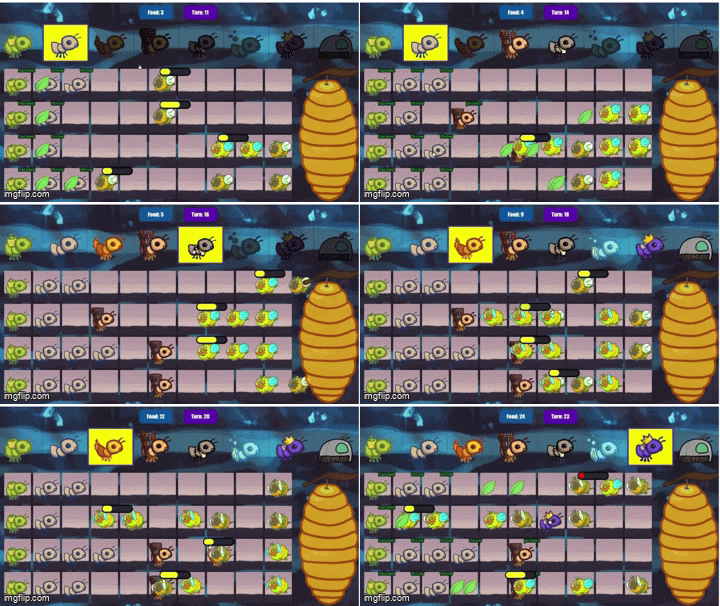
蚂蚁大战蜜蜂是一款用 Python 开发的策略回合制塔防游戏,灵感来源于加州大学伯克利分校 CS61A 课程的课程项目。 玩家需要利用有限的食物资源部署各种蚂蚁来保护蚁巢,保卫蚁后免受入侵蜜蜂的攻击。
本项目展示了扎实的面向对象设计、事件驱动编程和游戏逻辑架构 —— 全部从零实现。
玩法概述
- 目标: 通过在隧道中策略性地部署蚂蚁来阻止蜜蜂到达蚁后。
- 资源: 每只蚂蚁的部署都消耗食物,食物由采集蚁每回合再生。
- 回合: 每一轮,蚂蚁先行动(攻击、采集或防御),随后蜜蜂行动(移动或蜇刺)。
- 地形: 水域格子会立即杀死非防水蚂蚁。
- 胜利: 在任何蜜蜂到达蚁巢前消灭所有蜜蜂。
蚂蚁属性与技能
| 蚂蚁 | 预览 | 食物消耗 | 生命值 | 特殊能力 |
|---|---|---|---|---|
| 采集蚁 |  | 2 | 1 | 每回合产出食物 |
| 投掷蚁 | 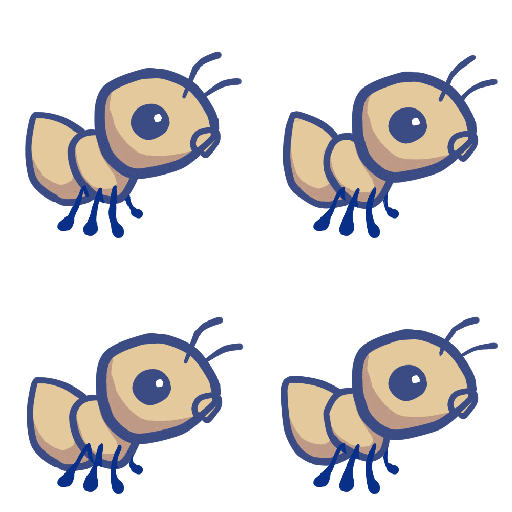 | 4 | 1 | 攻击前方蜜蜂 |
| 短程投掷蚁 |  | 3 | 1 | 攻击距离超过 2 格的蜜蜂 |
| 远程投掷蚁 | 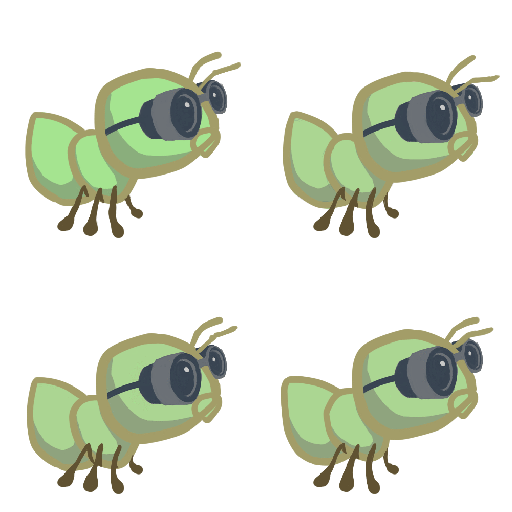 | 3 | 1 | 攻击 2 格以内的蜜蜂 |
| 火蚁 |  | 5 | 1 | 死亡时爆炸,伤害附近蜜蜂 |
| 墙蚁 |  | 4 | 4 | 高耐久的肉盾 |
| 饥饿蚁 |  | 4 | 1 | 每隔几回合吞噬一只蜜蜂 |
| 保镖蚁 | 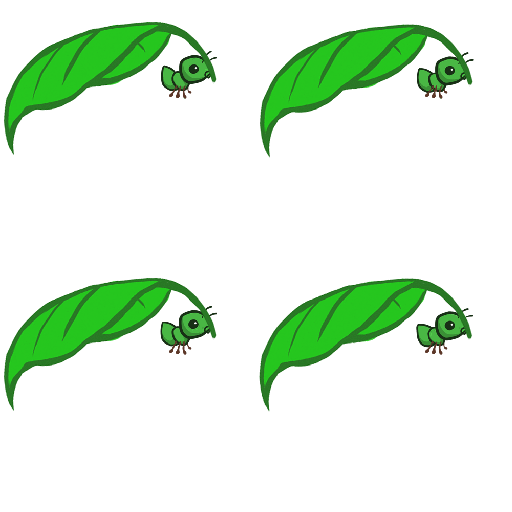 | 4 | 2 | 保护另一只蚂蚁免受伤害 |
| 坦克蚁 | 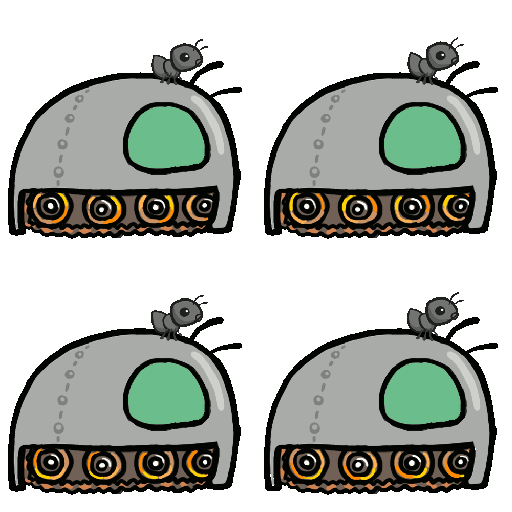 | 6 | 3 | 攻击其面前的所有蜜蜂 |
| 潜水投掷蚁 |  | 6 | 1 | 防水远程攻击者 |
| 蚁后 |  | 7 | 1 | 增强其他蚂蚁,被击杀则游戏结束 |
战斗逻辑
- 蚂蚁先行动: 攻击、采集或防御。
- 蜜蜂后行动: 向蚁后移动或蜇刺最近的蚂蚁。
- 生命值检查: 生命值 ≤ 0 的蚂蚁或蜜蜂被移除。
- 循环继续 直到所有蜜蜂被消灭(胜利)或蚁后被触及(失败)。
这一简单序列在与不同蚂蚁类型组合时,能产生出人意料的复杂策略。
面向对象设计
代码库强调类继承、封装和多态。
Ant—— 所有蚂蚁行为的基类。Bee—— 定义敌方移动和攻击逻辑。Place—— 管理蚂蚁、蜜蜂和隧道位置。Colony—— 管控整个游戏状态和回合逻辑。AntColonyGUI——(可选)使用tkinter提供可视界面。
每种新蚂蚁类型都是 Ant 的子类,允许清晰的功能扩展而无需修改现有逻辑。
资源经济与策略
玩家以有限的食物资源开局,必须高效管理。 部署蚂蚁消耗食物;只有采集蚁能补充食物。 过早大量投入可能导致蚁巢无人防守,而过于保守则面临被蜜蜂淹没的风险。
策略决策围绕部署位置、时机和蚂蚁协同展开。
致谢
这是加州大学伯克利分校 CS61A 的课程项目。Tom Magrino 和 Eric Tzeng 与 John DeNero 共同开发了本项目的框架结构。 美术由 Alana Tran、Andrew Huang、Emilee Chen、Jessie Salas、Jingyi Li、Katherine Xu、Meena Vempaty、Michelle Chang 和 Ryan Davis 绘制。
Overview
Ants vs SomeBees is a strategy turn-based tower defense game built in Python, inspired by the CS61A “Ants” project at UC Berkeley. Players deploy various ants using limited food resources to protect the hive, defending the Queen from invading bees.
This project demonstrates solid object-oriented design, event-driven programming, and game logic architecture – all implemented from scratch.
Gameplay Overview
- Objective: Prevent bees from reaching the Queen by strategically deploying ants in tunnels.
- Resources: Deploying each ant costs food; food is regenerated each turn by Harvester ants.
- Turns: Each round, ants act first (attack, harvest, or defend), then bees act (move or sting).
- Terrain: Water tiles instantly kill non-waterproof ants.
- Victory: Eliminate all bees before any reach the hive.
Ant Stats and Abilities
| Ant | Preview | Food Cost | HP | Special Ability |
|---|---|---|---|---|
| Harvester | | 2 | 1 | Produces food each turn |
| Thrower | | 4 | 1 | Attacks bees ahead |
| Short Thrower | | 3 | 1 | Attacks bees beyond 2 tiles |
| Long Thrower | | 3 | 1 | Attacks bees within 2 tiles |
| Fire Ant | | 5 | 1 | Explodes on death, damaging nearby bees |
| Wall Ant | | 4 | 4 | High-durability tank |
| Hungry Ant | | 4 | 1 | Devours one bee every few turns |
| Bodyguard | | 4 | 2 | Protects another ant from damage |
| Tank | | 6 | 3 | Attacks all bees in its tunnel |
| Scuba Thrower | | 6 | 1 | Waterproof ranged attacker |
| Queen | | 7 | 1 | Buffs other ants; game over if killed |
Combat Logic
- Ants act first: Attack, harvest, or defend.
- Bees act second: Move toward the Queen or sting the nearest ant.
- HP check: Ants or bees with HP ≤ 0 are removed.
- Loop continues until all bees are eliminated (victory) or the Queen is reached (defeat).
This simple sequence produces surprisingly complex strategies when combined with different ant types.
Object-Oriented Design
The codebase emphasizes class inheritance, encapsulation, and polymorphism.
Ant– Base class for all ant behaviors.Bee– Defines enemy movement and attack logic.Place– Manages ants, bees, and tunnel positions.Colony– Controls overall game state and turn logic.AntColonyGUI– (Optional) provides a visual interface usingtkinter.
Each new ant type is a subclass of Ant, allowing clean feature extension without modifying existing logic.
Food Economy and Strategy
Players start with limited food resources and must manage them efficiently. Deploying ants costs food; only Harvesters replenish it. Spending too much too early can leave the hive undefended, while being too conservative risks being overrun by bees.
Strategic decisions revolve around placement, timing, and ant synergies.
Acknowledgments
This is a course project from UC Berkeley’s CS61A. Tom Magrino and Eric Tzeng developed the project framework together with John DeNero. Art was created by Alana Tran, Andrew Huang, Emilee Chen, Jessie Salas, Jingyi Li, Katherine Xu, Meena Vempaty, Michelle Chang, and Ryan Davis.